
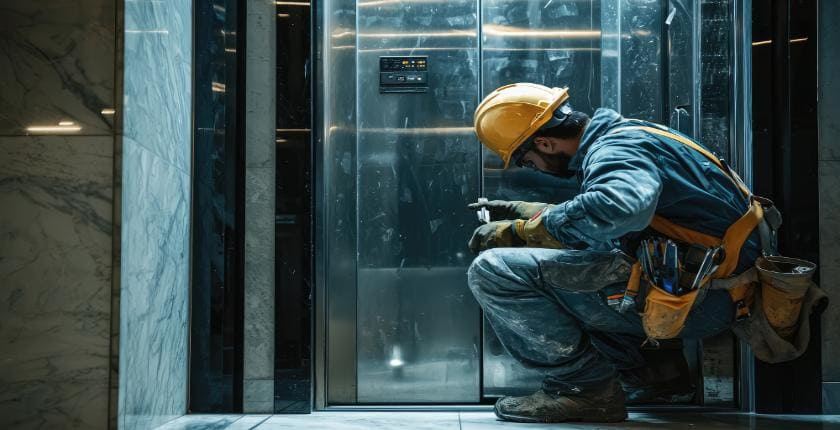
Elevator Installers
Enquire Today For A Free No Obligation Quote
At Elevator Installers, we specialise in the professional design, supply, and installation of elevator systems across the UK, delivering safe, compliant, and fully commissioned lift solutions for residential, commercial, and public sector clients.
Our qualified elevator engineers manage every stage of the installation process, from initial site survey and system specification through to final testing, certification, and handover.
Whether you are installing a passenger elevator in a new commercial development, a platform lift in a heritage building, or a home lift in a private residence, Elevator Installers provides the technical expertise and regulatory compliance that every professional elevator installation demands.
What Do Elevator Installers Do and What Services Are Provided?
Professional elevator installers function as qualified engineering specialists who manage the mechanical and electrical implementation of vertical transport systems within diverse building structures.
This role encompasses the entire lifecycle of an installation project, ensuring that structural assessments and shaft preparations align with the technical requirements of the specific lift machinery.
By coordinating with architects and site managers, these experts facilitate the safe transition of components into a building, culminating in rigorous load testing and safety certification that satisfies national building codes.
What Types of Elevator Installation Services Do Elevator Installers Provide?
We deliver a comprehensive range of elevator installers services designed to meet varying occupancy and accessibility requirements, including:
- New passenger lift installation – Engineering high-capacity vertical transport for multi-storey residential and commercial developments.
- Platform lift implementation – Providing accessibility solutions that ensure compliance with the Equality Act for public and private facilities.
- Residential home lift fitting – Installing through-floor or shaft-enclosed systems to improve mobility within private dwellings.
- Goods and service lift setup – Designing robust, high-tonne platforms for industrial warehouses and hospitality environments.
- Machine-room-less (MRL) integration – Optimising space in constrained buildings by housing the drive motor directly within the shaft.
- Full system replacement – Removing obsolete machinery and installing modern, energy-efficient units within existing building envelopes.
How Much Does Elevator Installation Cost?
The cost of elevator installation ranges from £15,000 to over £100,000, depending on the lift type, the number of floors served, and the structural preparation required.
Costs are primarily influenced by the travel height, the specified load capacity, the choice of drive technology, such as traction or hydraulic, and the level of internal finish and architectural glazing requested for the car.
Contact Elevator Installers to get customised prices for getting elevator installation at your property.
Where Are Elevators Commonly Installed in Buildings?
Vertical transport solutions provided by elevator installers are typically integrated into the central core of high-occupancy structures to optimise pedestrian flow and ensure inclusive access.
These systems are essential in multi-storey residential blocks, commercial offices, and healthcare facilities where rapid movement between levels is a prerequisite for operational efficiency.
By placing lifts near primary entrances or transit hubs, building owners provide a seamless navigation experience for occupants, while also satisfying the structural requirements for emergency evacuation and fire safety.
When Should Property Owners Hire Elevator Installers for a New Lift System?
Engagement with elevator installers should occur during the architectural planning phase to ensure that shaft dimensions and electrical loads are correctly specified before construction.
Early consultation allows for the integration of structural moment capacities and pit depths, which prevents expensive remedial works during the build cycle.
Furthermore, owners of older properties should seek professional advice when existing machinery demonstrates mechanical fatigue or when a change of building use necessitates a higher standard of accessibility.
How Does the Elevator Installation Process Work?
The systematic workflow managed by elevator installers follows a structured engineering roadmap that begins with a comprehensive site appraisal to determine foundation suitability.
Following this, the mechanical frame and guide rails are erected within the shaft, providing the necessary alignment for the lift car and counterweights.
Once the drive machinery and control panels are integrated, engineers perform phased functional testing, including overspeed governor checks and emergency alarm verification, to certify the system is fit for passenger service.
What Types of Elevators Can Elevator Installers Install?
Our team provides a versatile selection of elevator installation solutions tailored to specific architectural and functional demands, including:
- Electric traction elevators – High-speed systems utilising pulleys and counterweights for multi-storey commercial high-rises.
- Hydraulic lift systems – Robust units designed for low-to-medium rise buildings requiring smooth, heavy-duty transit.
- Panoramic glass elevators – Aesthetically focused installations that provide visual connectivity and enhance modern building facades.
- Through-floor home lifts – Compact, space-saving designs for domestic environments that require minimal structural intervention.
- Industrial freight lifts – Heavy-duty engineering for the safe movement of warehouse pallets and industrial equipment.
Which Industries and Buildings Require Professional Elevator Installation?
A wide variety of sectors depend on elevator installers to maintain high-traffic efficiency and ensure that their premises are fully accessible to all users.
Clinical environments such as NHS hospitals require uncompromising reliability for patient transit, while retail centres and hotels utilise vertical transport to enhance the customer experience.
By installing compliant systems, these organisations meet their statutory obligations under health and safety law, providing a safe and productive environment that supports the building’s commercial viability.
How Long Does Elevator Installation Typically Take?
The timeframe for completing a project with elevator installers depends on the complexity of the building and the lead times for bespoke components, with most installations lasting four to eight weeks.
Simple platform or home lifts can often be commissioned in under ten working days, whereas a multi-car traction system in a commercial development requires a longer phased implementation.
Engineering teams coordinate these works to ensure that the vertical transport is ready for handover in alignment with the wider construction schedule.
What Safety Standards and Regulations Must Elevator Installers Follow?
All activities conducted by elevator installers must satisfy the rigorous requirements of the Lift Regulations 2016 and LOLER 1998.
These national standards mandate that every new installation undergoes a thorough examination by a competent person before being placed into service to verify that all braking and safety gear are operable.
Adhering to these benchmarks is essential for maintaining building insurance validity, providing owners with a documented audit trail that confirms the system meets the highest engineering standards.
Why Should Building Owners Choose Professional Elevator Installers?
Choosing accredited elevator installers ensures that your building’s vertical transport is engineered for long-term reliability and total safety, featuring:
- Statutory Compliance – Guaranteeing that every installation meets the strict criteria of national building codes and safety laws.
- Technical Precision – Utilising specialist engineering knowledge to ensure that machinery is perfectly calibrated to the building’s structure.
- Certified Components – Fitting only high-grade parts that offer durability and enhanced energy efficiency for the building owner.
- Project Management – Overseeing the entire transition from site survey to final certification to minimise construction delays.
- Safety Assurance – Providing a defensible safety framework that protects passengers and reduces the risk of mechanical failure.
Contact Elevator Installers for a consultation to get elevators that are custom-designed for your property’s safety and regulatory requirements.
Find More Info
Make sure you contact us today for a number of great elevator installers services.
For more information on elevator installers, fill in the contact form below to receive a free quote today.
★★★★★
“The installation was smooth, and the team explained everything clearly.”
James Manchester
Greater London
★★★★★
“They fitted our new lift quickly and to a very high standard.”
Sophie Birmingham
Greater London